
Contact | Free MRI review
1-800-533-7313
Auto Font Resizer
Decrease font sizeDefault font sizeIncrease font size

DEGENERATIVE DISC DISEASE

    Frequently Asked Questions

    Can an MRI change from worse to better for a degenerative disc protrusion by doing nothing?
    What can I do to help keep my back healthy after treating my degenerative disc disease?
    Does all degenerative disc disease require treatment?
    more faqs »

    General Information

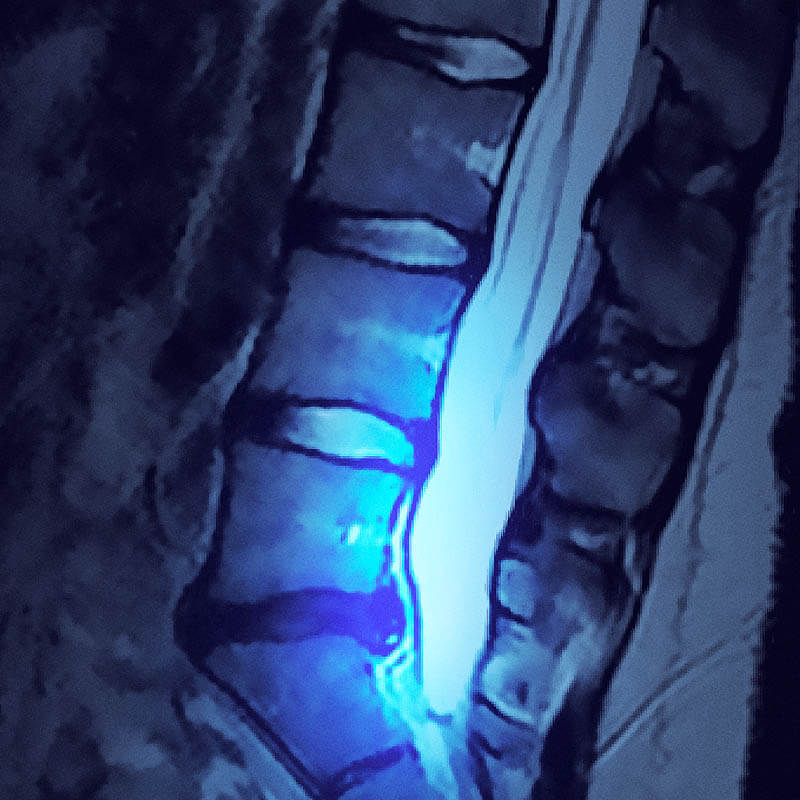
    The term degenerative disc disease is really a misnomer. It should be called the “degenerative spine cascade”. Spinal degeneration, or spondylosis, or “arthritis of the spine” occurs in all of us to some extent throughout life. It can start as early as teenage years and last a lifetime. There are 24 spinal vertebrae and 23 spinal motion segments (a vertebrae above and below with an intervertebral disc in between). Spinal degeneration can occur at any of these levels and at different points in time. The structures involved are the vertebral body, the intervertebral disc, the facet joints, and the surround ligaments, tendons, and muscles. The spinal cord, spinal nerves, and spinal blood vessels can be involved as well.

    Degenerative Disc Disease Symptoms

    Over the span of your life, your spinal discs are going to start to break down due to wear and tear. You may never show signs or symptoms of degenerative disc disease, but in case you ever do, here is a list of the more common ones.

    • Deep Constant Pain - These periods of pain will come and go and depending on the severity of disc degeneration may last from a few days to a few months before you feel relief.
    • Back or Neck Pain - Depending on the location of the degenerated disc(s) you will either feel pain in the back or in the neck. It really is that simple.
    • No Arm or Leg pain - Degenerative disc disease pain should only affect the neck, back, buttocks and sometimes the thighs. It should not be felt in the arms or below the thighs.
    • Pain When Sitting - While in a seated position, pain from degenerated disc(s) will become worse as they are place under much greater amounts of load stress then when standing upright.
    • Lying down Makes the Pain go Away - When lying down you take the load off your injured disc(s), reducing the amount of pain you are in.

    Just like all other medical conditions, the key to successful treatment is early diagnosis. With a correct diagnosis, you can be sure that there are no other underlying problems that will cause more serious symptoms in the future. To put your mind at ease and understand what steps you should be taking we suggest you contact Dr. Biscup for your free MRI review.

    The Degenerative Spine Cascade

    There are three phases in the degenerative spine cascade: the Injury Phase, the Instability Phase, and the Stabilization Phase. These phases can take 10-40 years to complete the cycle with 90% of people do unaware this is happening. To learn more about the degenerative spine cascade please click here.

    Learn about Degenerative Disc Disease treatment options.

    TREATMENT

    Frequently Asked Questions

    Will treatment cure degenerative disc disease?
    more faqs »

    It is important to understand that we currently do not have a “cure” for spinal degeneration and the many conditions associated with this process… In fact there are very few things we can CURE in spinal medicine and surgery.

    Non-Surgical Treatments

    Pain Management

    Surgical Treatments

    OTC Medicine
    Water Exercises
    “Core” Exercise Program Including Pilates and Yoga
    Aerobic Conditioning and Personal Training
    Caudal-Epidural
    Epidural
    Intradiscal Electrothermic Therapy
    Nucleous Replacement Disc Stabilization Arthroplasty
    Artificial Disc Replacement
    Artificial Facet Replacement


    At Biscup Spine we TREAT conditions and problems much like a dentist’s treats one tooth at a time. Spinal care is similar in the fact that we may need to see the dentists more than once for the same or a new problem. The focus today should be on treating the patient and not the x-ray, further developing minimally invasive solutions, and emphasizing exercise and wellness as a comprehensive approach to the care and ongoing management of symptomatic spinal conditions.