
Contact | Free MRI review
1-800-533-7313
Auto Font Resizer
Decrease font sizeDefault font sizeIncrease font size

Spondylolisthesis

    Frequently Asked Questions

    If I need surgery is there minimally invasive surgery available?
    Is spinal instability the same as spondylolisthesis?
    My L4 shifts 1mm and 3mm, is this significant? In conjunction with disc degeneration and stenosis limited to L4/5, does it require fusion?
    more faqs »

    General Information

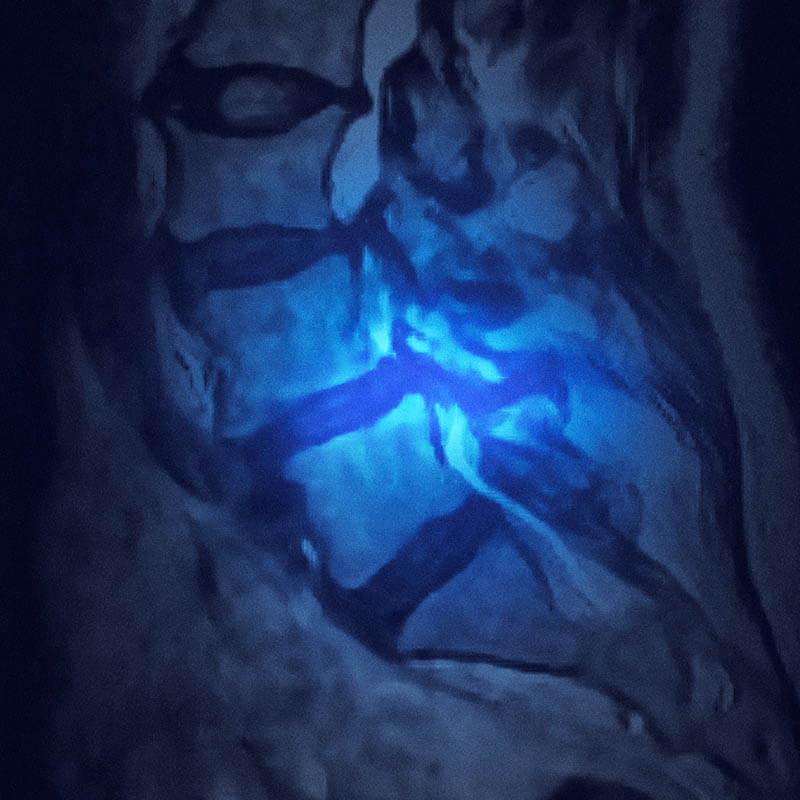
    Spondylolisthesis is a common condition where one vertebrae shifts out of position relative to the vertebrae below it. The abnormal shift can occur at any location in the spine and can move forwards (anterolisthesis), backward (retrolisthesis), or sideways (laterallisthesis). There are five different types of spondylolisthesis named for the underlying reason that caused the condition to occur, however, the two most common types are spondylolytic spondylolisthesis and degenerative spondylolisthesis.

    Spondylolytic spondylolisthesis is an acquired condition that occurs primarily in young teenagers and is carried throughout life. It is believed to be a stress fracture involving a small part of the posterior vertebrae that never heals properly. Roughly seven out of every 100 people in Western Culture have this problem with 90% going through life unaware of the condition. It is very common in athletes. However, when problematic, symptoms may include back pain, sciatica, numbness, and in severe cases weakness of the lower extremities including a condition known as “foot drop.”

    Degenerative spondylolisthesis in contrast occurs most commonly in persons over the age of 60 and is more common in women. The condition occurs as part of the instability and stabilization phases of the spine degeneration process. In contrast to spondylolytic spondylolisthesis, symptomatic degenerative spondylolisthesis is often associated with severe central canal spinal stenosis and the nerve compression problems associated with it. Dr. Biscup has identified three different types of degenerative spondylolisthesis, the most common (85%) being a Type III, or stable degenerative spondylolisthesis. Special diagnostic testing is required to determine which type of degenerative spondylolisthesis a person might have. Many cases respond to non-surgical care. When surgery is required, the traditional approach is a laminectomy and spinal fusion.

    Spondylolisthesis Symptoms

    Severe Back and Extremity pain – In most back conditions there will be pain either in the back OR in extremities. With spondylolisthesis and scoliosis patients typically feel severe pain in both the back as well as affected extremities.

    Burning Pain – The type of pain associated with spondylolisthesis tends to be a burning pain where the affected areas feel hot and aflame.

    The key to successfully treating spondylolisthesis and many other spinal conditions is early detection and diagnosis. With a correct diagnosis, you can be sure that there are no other underlying problems that will cause more serious symptoms in the future. If you have any questions or concerns you would like to have answered, please contact us. Be sure to ask about a complimentary MRI review by Dr. Biscup.

    Learn about Spondylolisthesis treatment options.

    Treatment

    Frequently Asked Quesions

    Do I need surgery for spondylolisthesis?
    more faqs »

    Non-surgical treatment of spondylolisthesis is usually effective. Surgery may occasionally be required if conservative care fails. Surgical options include a minimally invasive primary repair of the bone defect if the patient is young and/or has a healthy intervertebral disc and facet joints, or, spinal fusion surgery if advanced degeneration and spinal instability is present along with foraminal spinal stenosis. When treating spondylolisthesis, Dr. Biscup takes a very careful review of the anatomy and clinical symptoms to determine the most appropriate and least invasive procedure to perform. If fusion surgery is deemed necessary, considerable variation in approach and technique exists. There is also controversy regarding the need to correct the deformity or leave it in position. Don’t be afraid to seek different opinions.

    Non-Surgical Treatments

    Pain Management

    Surgical Treatments

    OTC Medicine
    Ice
    Heat
    Massage and Massotherapy
    Traction
    Water Exercises
    “Core” Exercise Program Including Pilates and Yoga
    Physical Therapy
    Bracing
    Selective Nerve Block
    Epidural
    Transforaminal Epidural
    Percutaneous Spinal Fusion Sextant
    Spinal Fusion Without Instrumentations and Implants
    Spinal Fusion With Instrumentation and Implants
    Major Spine Reconstruction


    If surgery is required, the majority of spine surgeons today will suggest a laminectomy and spinal fusion and not offer a minimally invasive alternative.

    An alternative minimally invasive micro decompression laminaplasty procedure for the surgical management of Type III degenerative spondylolisthesis can be performed successfully avoiding the need for more aggressive decompression and fusion procedures. It is an operation that can “give you your life back”. If the condition is stable, why fuse it? Always ask your spine doctor and surgeon if there is an alternative to spinal fusion surgery. If they say no, get another opinion.